


|
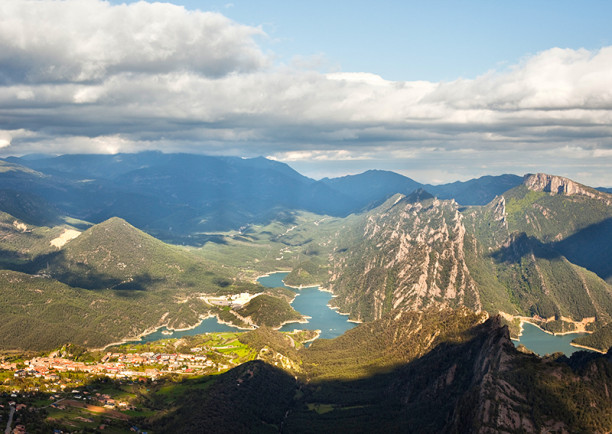
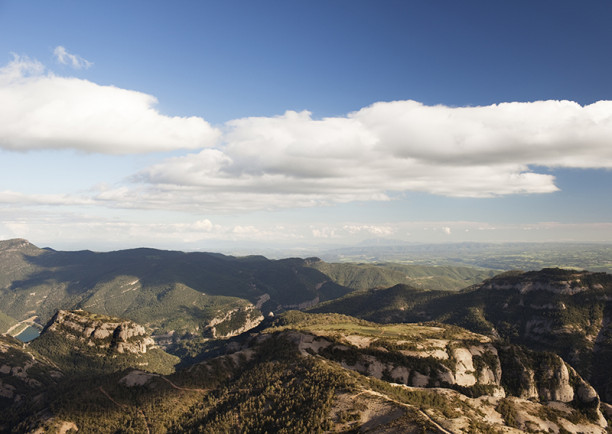
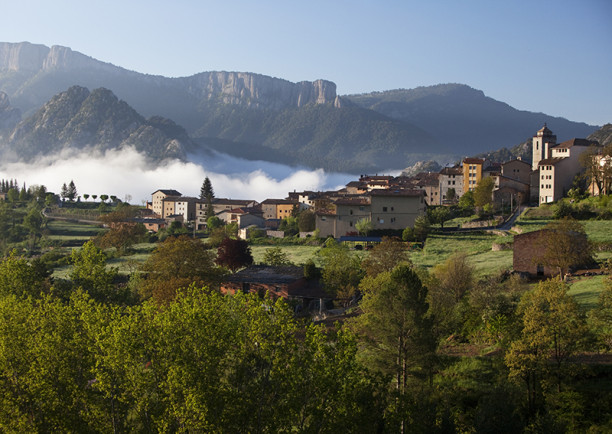
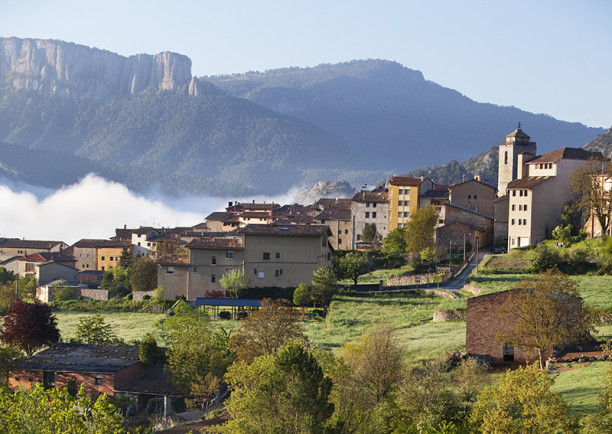
Situated in the Vall de Lord (Lord Valley), in the north-east of the comarca (local district) of El Solsonès, Sant Llorenç de Morunys is also known as Sant Llorenç dels Piteus (a name which comes from the old drap piteu cloth industry). In fact, it is still possible to see the perxes (hangers) on the upper parts of the houses. This was the name given to the attics where the cloth was left to dry in the most important `period of this activity. Today it is no longer possible to find drap diteu, but there are industries that produce food, cured meats, cheeses and mushrooms and that can delight any palate.
Sant Llorenç has conserved its walled enclosure and the five portals that provide entry to the town and lead to the Plaça Major (Main Square) and the arish church. A large monumental portal gives entry to the Plaça de la Canal...Do you feel like discovering the town? What to visit
Route
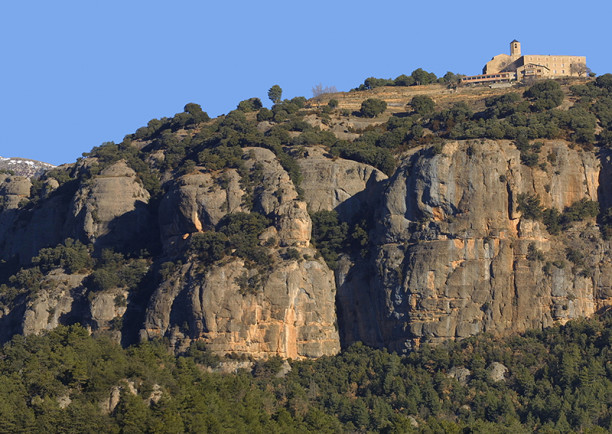
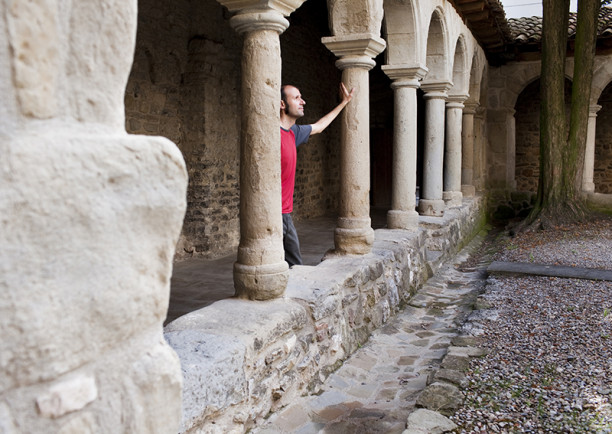
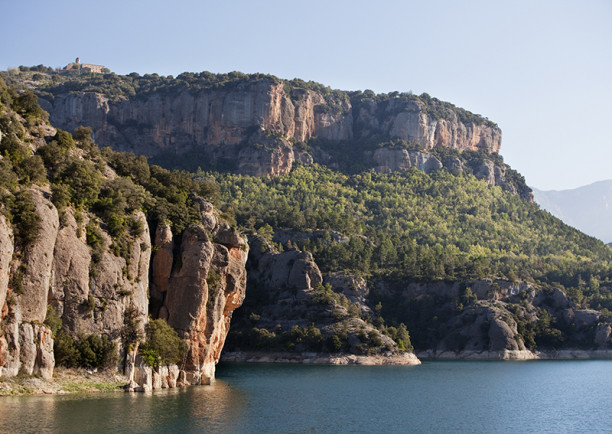
This large (1180 m high) mass of conglomerate rock rises up between Vilamala and the Vall de Sant Llorenç. From Sant Llorenç de Morunys take the road to Coll de Jou and then after 1.5 km there is a sign on the left. Follow the path to the end of the track, passing the 11th to 12th century, Romanesque church of Sant Serni del Grau, along the way. On reaching the foot of the stone mass, visitors must leave their cars and continue on foot (for about 15 minutes). At the top of the hill, they will find a large cannon commemorating the Carlist wars and also the 19th century Santuary of Lord. The oldest remains of the sanctuary date back to the 10th century and it contains the image of a brown virgin dating from the 15th or 16th century.
TraditionsPopular walk through the Vall de Lord Saturday morning of Easter Week. Corpus Festival As part of the celebration of Corpus, branches are used to cover the portals of the village, which are decorated with flowers and other materials that vary according to the theme for chosen for the year in question. Corpus Festival. Arts and Trades Fair The first weekend in July. Exhibition of craft work and old trades. The most interesting exhibits include compositions of dried flowers and sculptures made from box wood stumps, etc. Festa Major (Main Festival) of Sant Llorenç de Morunys This celebration is held in hopnour of Sant Llorenç and is held in the first week of August. It is closely linked to elements of folklore and tradition, and the three cautious wise men of the piteus: Llorenç dels Piteus, Serni de les Planelles and Lleïr dels Calots. Their life history states that they came into existence at Sant Llorenç de Morunys on 8th July, 1990, as they were built by the master giant builder of Solsona: Manel Casserres. During the days of the festival, there are all sorts of shows and events, for young and old alike. Autumn and Huntsman’s Fair This is held on the first Sunday in October. It could be classed as a classical fair in which some of the stalls typically seen at fairs are joined by other, more specialised, hunting stalls, exhibiting animals and all sorts of objects with which to enjoy this sport.
|
Sant Llorenç de Morunys
 Gallery 1: House Image #1
 Gallery 1: House Image #1
 Gallery 1: House Image #1
 Gallery 1: House Image #1
 Gallery 1: House Image #1
 Gallery 1: House Image #1
 Gallery 1: House Image #1
 Gallery 1: House Image #1
 Gallery 1: House Image #1
 Gallery 1: House Image #1
 Gallery 1: House Image #1
 Gallery 1: House Image #1
 Gallery 1: House Image #1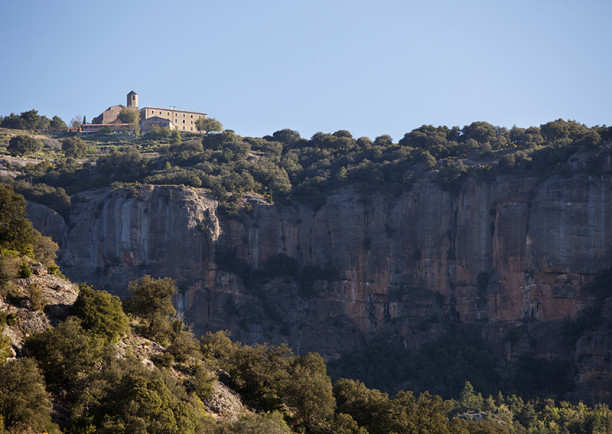
|
Contact information:
|
|||||||||||
|
|
|||||||||||
|
Sant Llorenç de Morunys
Oficina de Turisme de la Vall de Lord - Ctra. de Berga, s/n |
|||||||||||
|
|||||||||||