


|
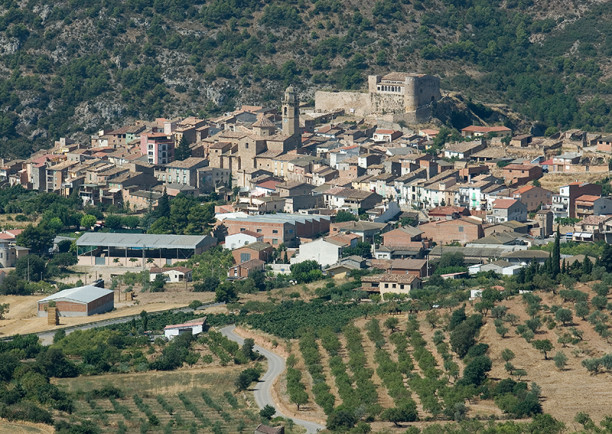
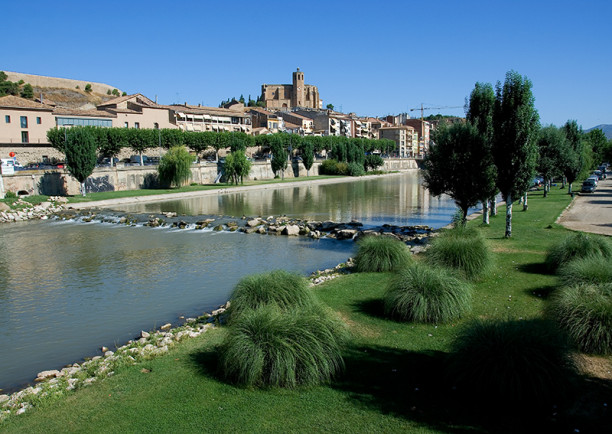
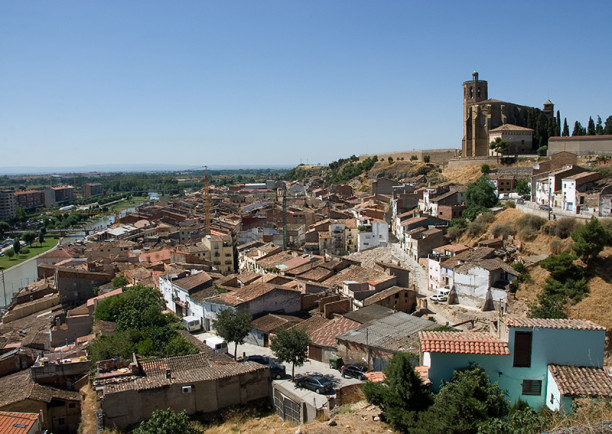
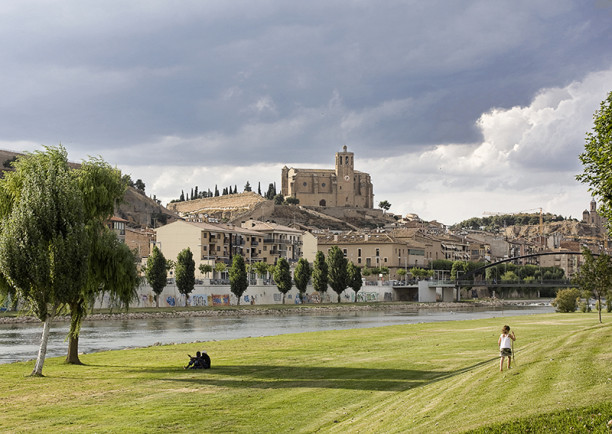
The city of Balaguer in the comarca of La Noguera is becoming more and more of a reference for tourism in the comarques (local districts) of inland Catalonia. Historically speaking, Balaguer has much to see and much to say. This is evident from the number of its monuments that remain standing, having passed the test of time, which include: an old quarter, medieval walls, the remains of a Moorish castle, and later constructions such as the Palau dels Comtes d'Urgell (Palace of the Counts of Urgell), the convent of Sant Domènec with the Gothic-style church of Santa Maria, which is one of the biggest in Catalonia... and the Sanctuary of Sant Crist (Christ the Lord), which houses an image that has been venerated for many years and has become the symbol and standard of this city. For all of these reasons, Balaguer has much to see and much to say!
Come and discover it for yourself! What to visit
Pla d'AlmatàThe Almatà Plain is an extensive area that stretches out to the west of the Santuari del Sant Crist (Shrine of Christ). It was there that the Moors first settled when they reached what is now Catalonia in around 713-715. This is one of the most important sites for archaeological remains in Catalonia. Excavations work has been carried out at the site since 1983, which has led to the discovery of an important part of the urban layout that used to occupy the plain.
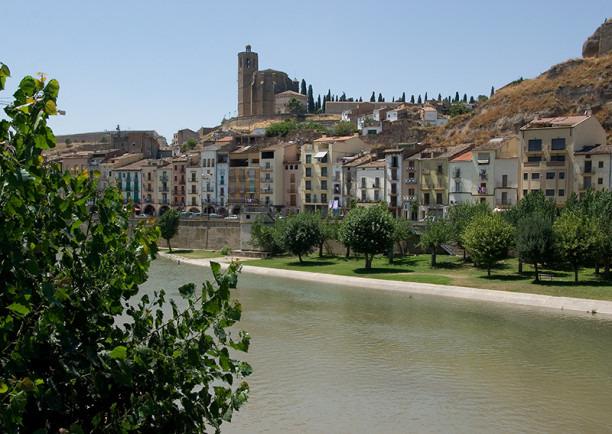
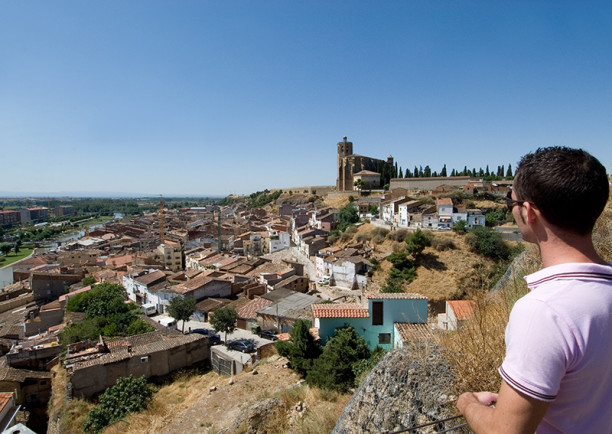
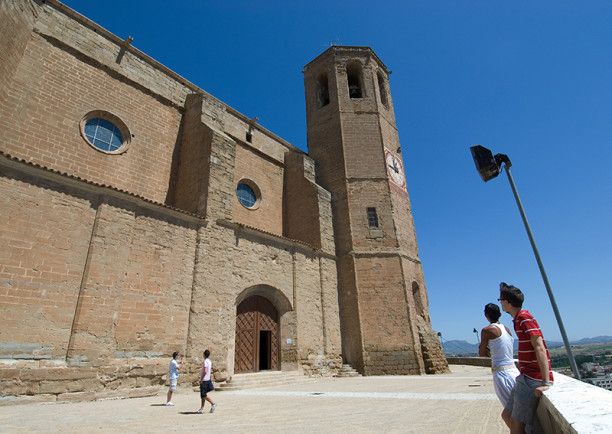
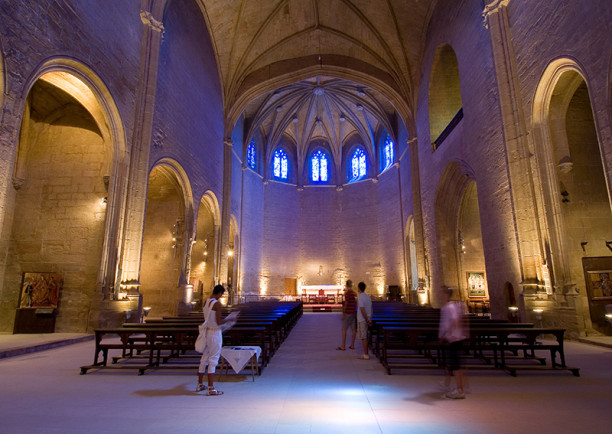
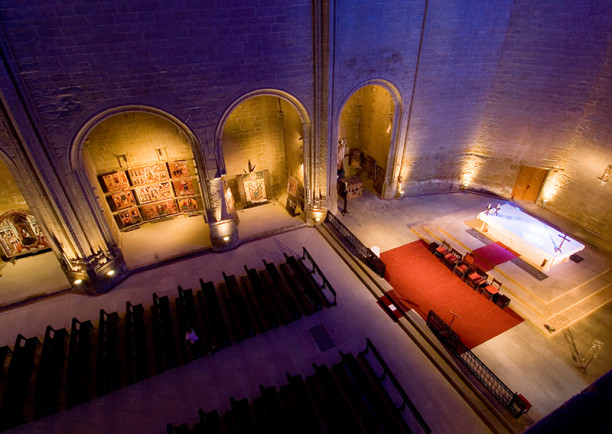
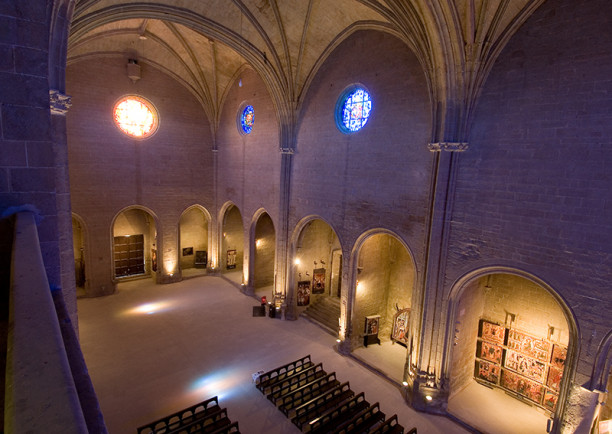
Church of Santa MariaOn account of its size and location, the church of Santa Maria édominates the city and has become Balaguer’s main symbol of identity. The construction of this Gothic-style church, which is built of cut stone and has a single nave, began in 1351. Its most attractive aspects include the purity of its shape and geometry, its simple compact form, powerful buttresses and impressive octagonal bell-tower. The church has been declared a historic- artistic Monument. It is open for visits on Saturdays and Sundays.
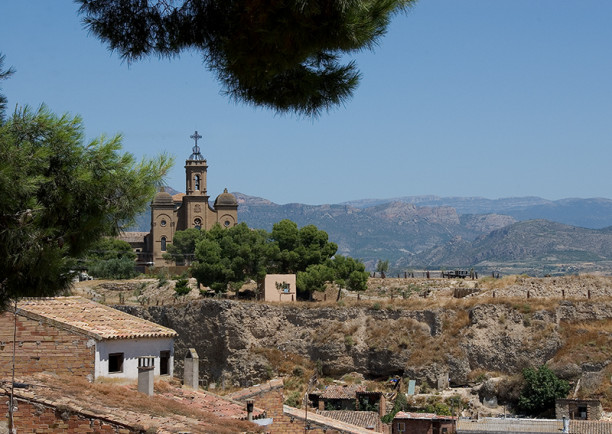
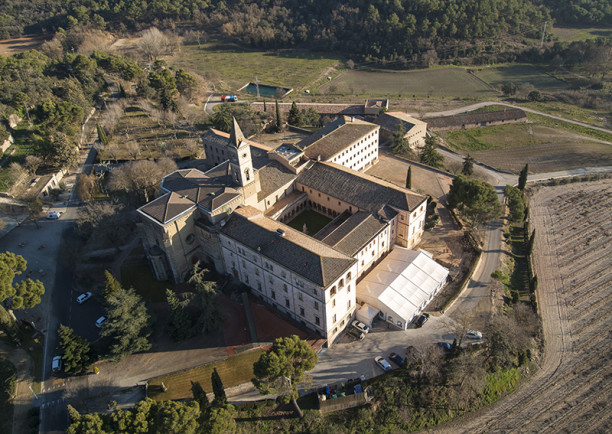
Shrine of the Sant CristThe church, the convent of the nuns of the order of the order of St Clare of Assisi, the priest’s house and the shrine house all form part of an architectonic group that is visible from a great distance and makes the Sant Crist one of the city’s main landmarks. Another element of this group that deserves attention is the image of the Sant Crist of Balaguer, It is carefully protected and is one of the most venerated objects in the comarques (local districts) of western Catalonia and the neighbouring areas of Aragon. According to tradition, this was the first such image ever created, as its author, Nicodem, had an image of Christ on the cross firmly imprinted on his mind and therefore decide to create it. The original image was burnt during the Spanish Civil War and the current image was created by the sculptor Joaquim Ros and is based on a copy of the original. It is made from Flanders timber and includes a foot that was saved from the original work and transplanted onto this one.
The Shrine is open every day, during normal visiting hours. Historic centreThe historic centre is one of extremely few urban nuclei to have conserved its original Moorish plan. This has helped to strengthen the image of Old Balaguer and to provide it with one of the most imposing identities in the whole of Catalonia.
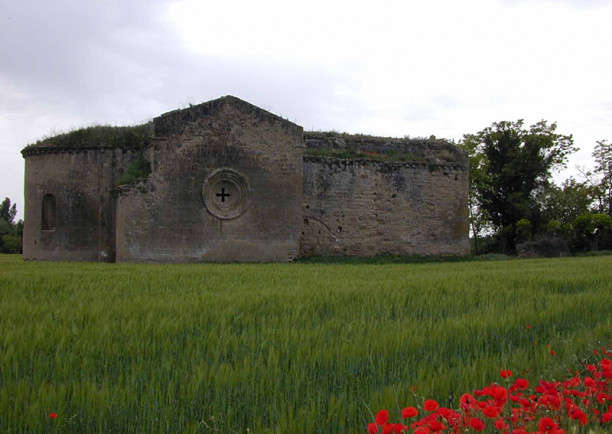
The walls serve as a great backdrop for the city: Together with Carrer Pont, they provide the river with a marvellous facade and along with the great open space of the Mercadal, they enclose a dense network of irregular roads and passages with quite exceptional characteristics. Les FranquesesThe temple of Santa Maria de les Franqueses is a typical Cistercian construction: with a Latin cross floor plan, covered by a barrel vault transept which is supported by the rest of the nave, and with three apses of which only one is visible to the exterior.
The only completely remaining part of the original monastery is the temple, although there are clear signs of the former presence of other elements typically associated with monasteries such as the wall that used to enclose it and the spaces belonging to the wine cellar.
The temple has conserved three doors that provide access to its interior. The main, and probably first, door is located at the foot of the nave. The second door, which is in the south wall of the church just after the transept, would have communicated the cloister with the temple. The third and final door is in the west wall of the evangelical chapel and contains remains of what was probably once a porch covered with an arris vault.
There are three types of lighting inside the building. The most outstanding from the artistic point of view is the rose window in the north face, which is doubly splendid as there are five further rings both inside and outside and also a dust-guard.
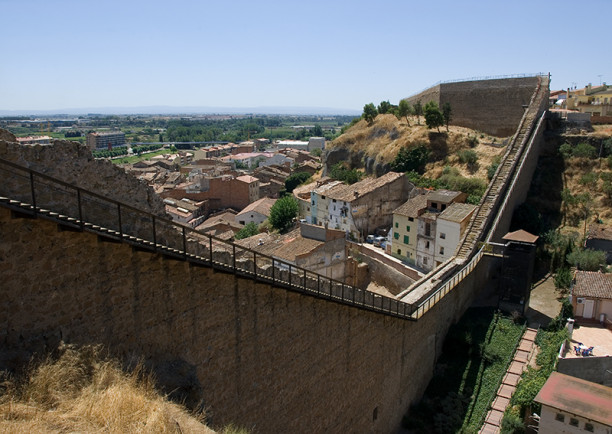
The wallsThe walls are made of thick, consistently-sized ashlars and their portals - del Gel and del Torrent, etc. - used to encircle the urban nucleus and were extended as the city grew. The first walls originated at the time of the city and are partially conserved to this date. To fully appreciate the walled enclosure it is necessary to go there from Plaça Mercadal, going through the Portal del Gel (Ice Gate), along Carrer la Muralla or Carrer la Creu, to Santa Maria or the “Bombo” sector. There, it is possible to see the panys de muralla (sections of wall) near the castle and in the Firal quarter of the city, near the cemetery. It is now possible to get to the Portal del Gel via an access tower and then cross a walkway to Santa Maria.
The church of Sant DomènecLocated at the head of the city’s main bridge, the convent of Sant Domènec was commissioned by Count Ermengol 10th of Urgell, in the 14th century. The convent still maintains a magnificent Gothic-style cloister with slender, delicate columns, and a church with an underpinned barrel vaulted roof, which has a very simple design and is divided into different sections by a series of transversal arches that do not quite cross.
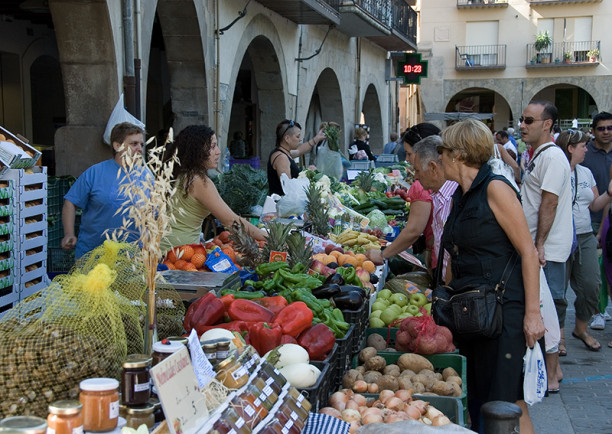
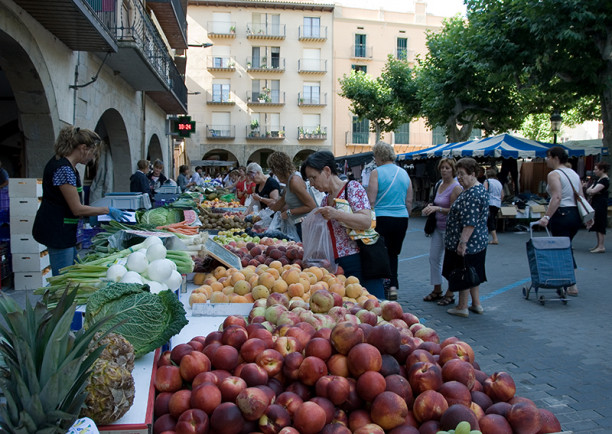
Plaça MercadalOnce in the lower part of the city, visitors will find the Plaça Mercadal (Market-Place Square), which is the largest porched square in Catalonia. This is the nerve centre of the city and is located right in its centre. Its 7,000 m2, large variety of facades and different types of porch arches give it a unique and almost spectacular beauty.
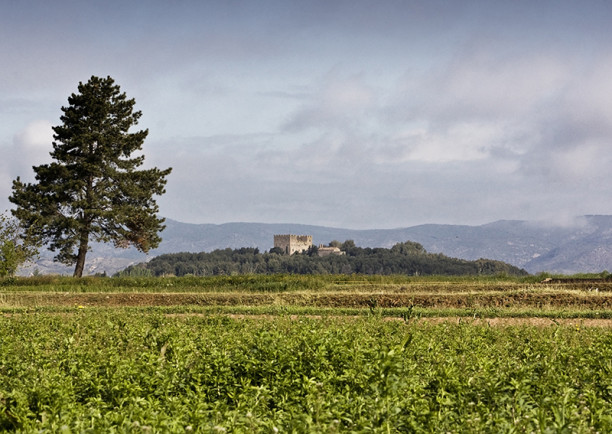
The Plaça Mercadal was traditionally the venue for the weekly Saturday market. It therefore became a meeting place for people from throughout the local district and a focus of interest and commercial activity for the whole local population. El castell FormósCastell Formós (Formós Castle) was the palace of the Comtes d’Urgell (Counts of Urgell). It was built when Ferran d’Antequera ordered the old Suda, a fort constructed by the Moors to defend the city, to be knocked down and replaced. The castle was located in the extreme north of the territories controlled by the forces of Islam. Its location could be considered strategic, as it gave those who held it a commanding view over the whole of the surrounding area.
Xalet MontiuXalet Montiu marks the beginning of the Catalan Art Nouveau style in Balaguer.
Art Nouveau came to Balaguer just when it was reaching its maximum expression in Catalonia and was an architectural style which was greatly influenced by the works created by Domènech i Montaner and Gaudí in the years between 1900 and 1914.
At the beginning of the 20th century, Balaguer was a village with about 5,000 inhabitants. Its urban nucleus extended to the end of Carrer Miracle and its medieval centre was enclosed within the old defensive walls. The opening of this walled enclosure with the creation of the road to Castelló led to the creation of Carrer Àngel Guimerà and the appearance of a series of single family houses. Many of these new houses, which were owned by the upper middle class families of Balaguer, were constructed in accordance with the latest architectural trends.
The building now houses the Institut Municipal de Progrés i Cultura (Municipal Institute of Progress and Culture).
Route
The visit begins at the Plaça Mercadal (Market Square),which is the nerve centre of the city. It is possible to park here and visit the Municipal Tourism Office, which is located in the Ajuntament (City Hall).
Very close to the starting point and just along Carrer Barri Nou, in the old Jewish quarter, visitors will find the Museu de la Noguera, at number 5, Plaça dels Comtes d’Urgell. Going back to the Plaça Mercadal, via Carrer del Miracle, visitors can walk up Carrer Botera to the Portal de Gel (Ice Gate), which was a gate in the city’s medieval wall.
To the left, it is possible to see an access tower that leads to the wall and from its walkway visitors can enjoy a fantastic panoramic view of the old city, with its steep narrow streets and passages, which give the historic nucleus of Moorish origin, its very special personality.
The wall comes to an end in front of the Church of Santa Maria. This is a Gothic-style collegiate church with a single nave whose attractiveness lies in its majestic sobriety. The church currently houses a permanent exhibition about art relating to the Virgin Mary called “Art a Santa Maria”, which is well-worth a visit. Visitors can then continue on along the route, going down the Escalinata de Santa Maria (Saint Mary’s staircase), which was built in 1954 and has 252 steps, and which connects the monument with the old town.
Those who still have the energy and interest to do some more walking can continue along La Reguereta, the cities oldest washing water and irrigation channel, to Plaça Sant Salvador. There, they can admire the remains of the former Church of Sant Salvador, which used to be the city’s main mosque.
Visitors who enjoy walking through the oldest part of the city should go to Carrer del Torrent. There they will go through another gate, Portal del Torrent, that formed part of the old city wall.
Carrer del Torrent will take visitors to Castell Formós (Formós Castle), which - although now in ruins – can still be visited on account of its historical interest. This was once an Moorish palace but was later converted and made the seat of the Comtes d’Urgell (Counts of Urgell).
Just in front of the castle, there is the Santuary del Sant Crist, the patron saint of the city, and a must-see for tourists visiting the city. Near the Sanctuary there is a picnic area with swings for children.
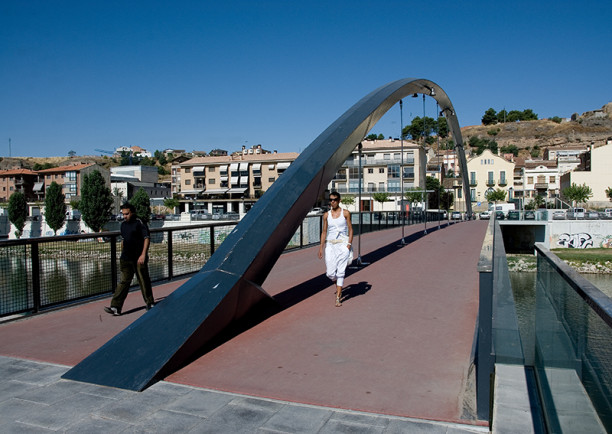
It should also be pointed out that the new part of the city, very close to the Pont de Sant Miquel, (Saint Michael’s bridge), houses the Convent of Sant Domènech. It has a church and marvellous Catalan Gothic cloister that are also well-worth a visit.
|
Balaguer
Gallery 1: House Image #1 Gallery 1: House Image #1
 Gallery 1: House Image #1
 Gallery 1: House Image #1
 Gallery 1: House Image #1
 Gallery 1: House Image #1
 Gallery 1: House Image #1
 Gallery 1: House Image #1
 Gallery 1: House Image #1
 Gallery 1: House Image #1
 Gallery 1: House Image #1
 Gallery 1: House Image #1
 Gallery 1: House Image #1
 Gallery 1: House Image #1
 Gallery 1: House Image #1
 Gallery 1: House Image #1
 Gallery 1: House Image #1
 Gallery 1: House Image #1
 Gallery 1: House Image #1
 Gallery 1: House Image #1
 Gallery 1: House Image #1
 Gallery 1: House Image #1
 Gallery 1: House Image #1
 Gallery 1: House Image #1
 Gallery 1: House Image #1
 Gallery 1: House Image #1
 Gallery 1: House Image #1
 Gallery 1: House Image #1
 Gallery 1: House Image #1
 Gallery 1: House Image #1
 Gallery 1: House Image #1
 Gallery 1: House Image #1
 Gallery 1: House Image #1
 Gallery 1: House Image #1
 Gallery 1: House Image #1
 Gallery 1: House Image #1
 Gallery 1: House Image #1
 Gallery 1: House Image #1
 Gallery 1: House Image #1
 Gallery 1: House Image #1
 Gallery 1: House Image #1
 Gallery 1: House Image #1
 Gallery 1: House Image #1
 Gallery 1: House Image #1
 Gallery 1: House Image #1
 Gallery 1: House Image #1
 Gallery 1: House Image #1
 Gallery 1: House Image #1
 Gallery 1: House Image #1
|
Contact information:
|
|||||||||||
|
|
|||||||||||
|
Balaguer
Oficina de Turisme de Balaguer - Plaça Comtes d''Urgell, 5 |
|||||||||||
|
|||||||||||