


|
The village of Barbens is located in the Central Catalan Depression, in the extreme north-east of the comarca (local district) of El Pla d’Urgell, where it lies in the lower part of the water basin of the river Ondara. The municipality stands on an irrigated plain that is watered by the Canal d'Urgell and harbours thousands of interesting places full of history and tradition: this is the land of the Knights Templar and the Knights Hospitaler. Why don’t you come and discover its secrets?
History
The territory that constitutes modern-day Barbens, and which was conquered by Ermengol IV of Urgell, is located at the southern limit of the Comtat (earldom) d’Urgell, bordering on the lands conquered by the Comtat de Barcelona. The first documented lord and master of the Castle of Barbens was Ramon Barrufell. The castle dates from before the 12th century, there being a reference to it and also to the parish of Barbens in the year 1098 in the act consecrating the Church of Santa Maria de Guissona. In 1164, Gombau de Ribelles, a baron of the Comte d’Urgell, and his wife Marquesa handed over their rights relating to the lands of Barbens to the Templar Commander of Gardeny. Furthermore, two years later, they advised their vassal Ramon Barrufell to sell his properties in Barbens to the Templar Order. In the middle of the 12th century, Arnau de Torroja, also handed over certain rights to this settlement and these were confirmed and extended in 1164 by his heir Ramon de Torroja and his wife Gaia de Cervera. Other aristocratic families, such as the Anglesola and, particularly, Ribelles families, also showed their generosity to the Templar cause in the form of donated lands and rights. In the year 1166, the Knights Templar acquired control of the castle and in 1168 Barbens fell under the independent command of Gardeny.
Emblematic buildings
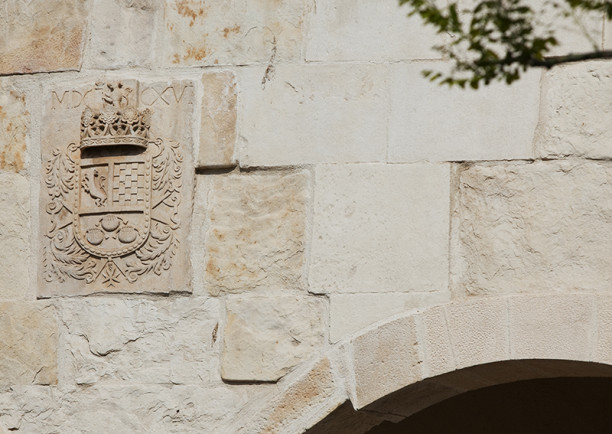
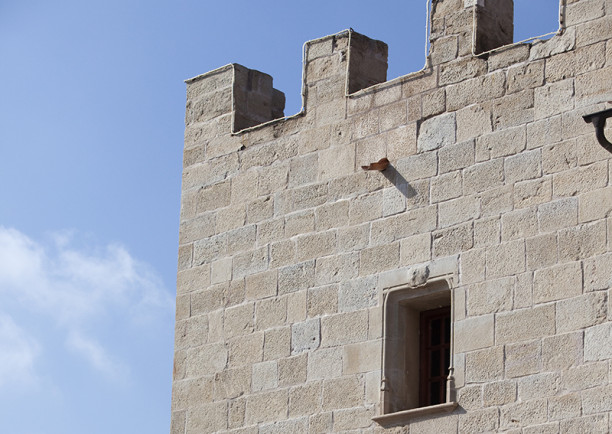
The Knight Commander’s CastleIs one of the most important buildings. It is referred to in documents dating from the 12th century, though it possibly owes its origins to the establishment of an old Roman camp. It is also important to mention the 16th century torre de l’homenatge (homage tower) and 17th century sala de les arcades(arcade hall) and also the stables, prisons, andbaroque stairway as well as the coats of armsbelonging to the different commanders who ruled over the house, including Fra Manuel de Montoliu i de Boixadors, a Knight Hospitaler commander who was responsible for the restoration work that was carried out on the building in 1753. The Church of Santa MariaThe existence of the Church of Santa Maria is documented in the year 1098 in the act consecrating the Church of Santa Maria de Guissona. Inside the building there is still a considerable barrel vault dating from the time of the Knights Templar and the belfry dates from the 18th century. The Church and the Cavallers de Malta (Knights of Malta) SquaresAre located in the old part of the village, still conserve a certain air of the past which is manifested in the beautiful lintels that adorn the entrances to the neighbouring houses. The three emblematicdomes that crown the Knight Commander’s Castle and the two lord’s manors, Cal Alçamora and Cal Veciana, are of great historic interest. El BullidorIs a pleasant and rather welcoming little hamlet that belongs to Barbens. It is possible to get there by following a walking route that starts in the north-west part of the settlement. The hamlet is about 2 km from the main village. Important local remains include those of the former church-castlewhich was first documented in the 12th century when Arnau de Formiguera ceded a number of possessions that he had in El Bullidor to the Templar Order. In 1487, the knight Dalmau de Copons acquired the hamlet from its owner, though it later passed into the hands of the Massot (who also acquired the title of Barons of El Bullidor) and Dalmases families. The settlement was also a famous hiding place for bandits. A land of apples
The apple.The local climatic conditions and soil characteristics in the Barbens area favour the production of apples that are typically very sweet and firm and keep very well. Festivals and traditions
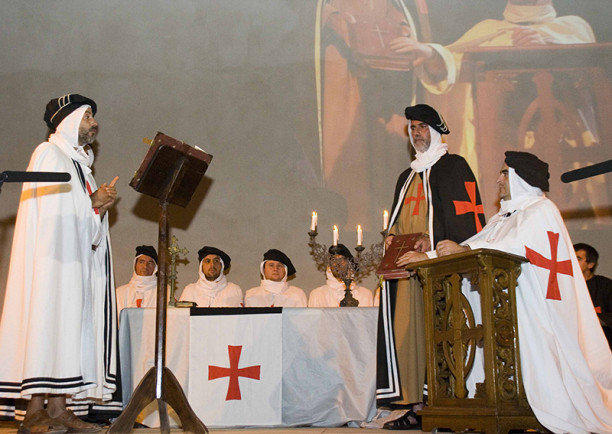
Summer Festa Major (main festival). 14th and 15th August. Festa Major of Sant Roc. 8th November. Knights templar and apple fair.Celebrated on the 3rd weekend in October. During this weekend, all of the streets are decked with stalls displaying different varieties of apples. At the same time the villagers celebrate the Templars project in which they theatrically relive events relating to this order with the greatest possible historical rigour. There is also a medieval market offering traditionally made products, games workshops for children, street entertainment, and meetings and gatherings.
|
Barbens
|
Contact information:
|
|||||||||||
|
|
|||||||||||
|
Barbens
Oficina comarcal de lUrgell - Agoders, 16 |
|||||||||||
|
|||||||||||